
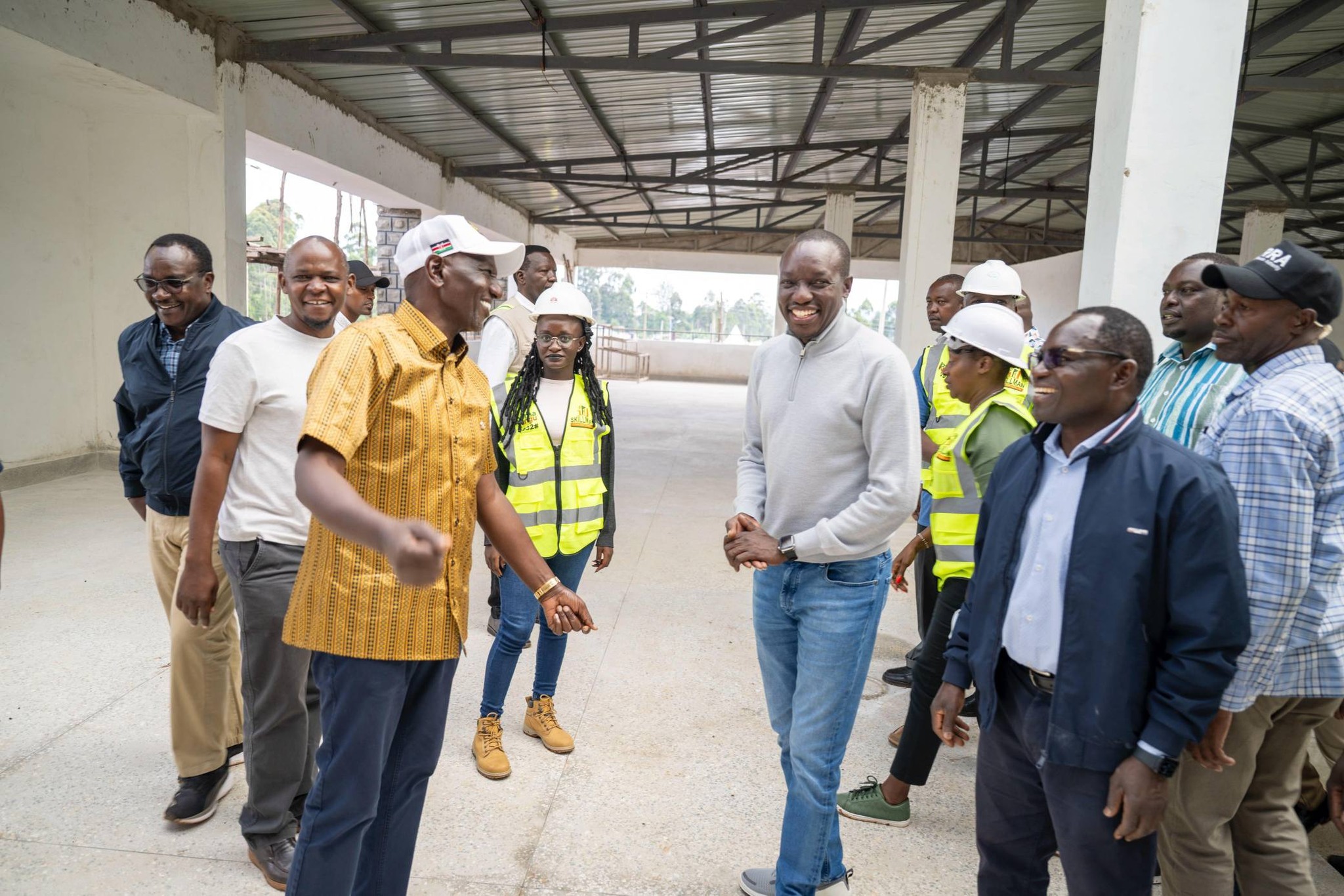
Gusii Development Tour Signals Shift to Inclusive Growth Under BETA
The presidential tour of Gusii last week underscored the Government’s renewed focus on delivering the Bottom-Up Economic Transformation Agenda (BETA), with a strong emphasis on projects that directly uplift livelihoods at the grassroots. H.E President Dr William Ruto led a series of launches, commissioning ceremonies and inspections across Kisii and Nyamira counties, signalling a shift from policy to tangible, community-level impact. Principal Secretary for Broadcasting and Telecommunications, Mr Stephen Isaboke, EBS was among the senior government officials accompanying the President throughout the tour.
Across the region, the projects highlighted the core pillars of BETA—agricultural productivity, micro and small enterprise growth, infrastructure development, digital transformation and human capital investment. In Kisii County, the President launched the construction of key road networks, including the Bobaracho–Manyasi–Tinga Road and access routes to tea-growing zones. These roads are expected to ease the movement of farm produce, lower transport costs and strengthen agricultural value chains, particularly for smallholder tea farmers.
Trade and enterprise were also at the centre of the tour. The commissioning of modern markets, including Kegogi ESP Market, and the inspection of ongoing market projects such as Nyakoe and Mogonga, demonstrated a deliberate effort to formalise and dignify small-scale trade. These facilities are designed to provide structured trading spaces, storage and improved sanitation, key enablers for micro, small and medium enterprises that BETA seeks to empower.
Under the Digital Superhighway and Creative Economy pillar, the tour also highlighted growing investments in digital connectivity across the Gusii region. Over 140 kilometres of fibre optic cable have already been installed across Kisii and Nyamira, connecting at least 94 public institutions, including hospitals, training centres and administrative offices.
The ongoing Digital Superhighway Phase II project is set to further expand this footprint, with 144 additional connectivity sites planned across sub-counties such as Nyamache, Kenyenya, Sameta, Kitutu Central and Borabu. Notably, several markets and public service centres, including Nyakoe Market, Suneka Market, Keroka Market, Ikonge Market and Nyansiongo Market, are earmarked for connectivity.
This means that markets being developed and commissioned under BETA, such as Kegogi and others across the region, are expected to benefit from expanded internet access and digital services, enabling traders to access e-commerce platforms, mobile payments and real-time market information. The integration of physical infrastructure with digital connectivity reflects a deliberate effort to modernise local economies and unlock new opportunities, particularly for young people in the creative and digital sectors.
The President further launched last-mile electricity connectivity projects to expand access to power for households and businesses, a move expected to complement digital infrastructure and spur rural industrialisation. Water projects inspected during the tour similarly aim to improve both domestic access and agricultural productivity.
In the social sectors, investments in health and education featured prominently. The President laid the foundation stone for student hostels at Nyamache KMTC and committed support towards upgrading Nyamache Sub-County Referral Hospital, both of which are already connected or earmarked for enhanced digital integration under the national fibre network.
In Nyamira County, similar priorities were evident, including the launch of Ikonge ESP Market and inspection of education and water projects. The region is also benefiting from digital hubs, Jitume labs and innovation centres, which are equipping young people with digital skills and tools to participate in the modern economy.
PS Isaboke described the tour as a clear demonstration of the government’s commitment to “taking development to the people,” highlighting how digital connectivity, alongside roads, markets and training institutions, is expanding opportunity at the grassroots. He emphasised that under BETA, infrastructure is not only physical but also digital, ensuring communities are fully integrated into Kenya’s growing digital economy.
Overall, the Gusii tour reflected a deliberate effort to align national policy with local realities. By integrating infrastructure, markets and digital connectivity, the government continues to operationalise the Bottom-Up Economic Transformation Agenda in a way that directly touches the lives of citizens.